EAB Chair Introduction and Vision
by Tobias de la Garza Eckle, MD, PhD, FASA
2026 | Summer Issue Newsletter
I am deeply humbled and honored to step into my new role as the Chair of the Educational Advisory Board (EAB). I want to express my sincere gratitude to our AUA Council President, Dr. Zhongcong Xie, for his trust and for nominating me to lead this vital board.
Before introducing our new team, I want to extend a heartfelt thank you to our immediate past chair, Dr. Arna Banerjee. Her amazing work and visionary leadership over the last several years have left an incredible mark on our organization. She has built a stellar foundation that we are fully prepared to build upon.
For those whom I have not yet had the pleasure of meeting, I am Dr. Tobias de la Garza Eckle, MD, PhD, FASA. I serve as a Professor of Anesthesiology, Medical Director of Advanced Practice Providers, and Director of Grand Rounds at the University of Colorado Anschutz Medical Campus. My career is rooted in bridging basic science with clinical innovation. I focus specifically on the circadian control of cardioprotection, acute lung injury, and metabolism in perioperative care. A primary cornerstone of my research portfolio explores the translational impact of circadian medicine. As a physician-scientist and educator, my focus has always been on translating complex scientific paradigms into actionable bedside teaching. I am excited to bring this passion for lifelong learning and the future of circadian medicine to the national level with the AUA.
We are expanding the EAB with an incredible group of national leaders. I am thrilled to welcome our new Vice Chair and an elite panel of new members who will help guide our mission:
- Maurice "Frankie" Joyce, MD, EdM, FASA (Vice Chair, Term Expires 2028) – Tufts Medical Center: Expert in educational methodology and leadership.
- Karsten Bartels, MD, PhD, MBA (Term Expires 2029) – University of Michigan: Specialist in health services research, patient safety, and perioperative mental health.
- Lee-lynn Chen, MD (Term Expires 2029) – UCSF Medical Center: Known for innovating anesthesia training through simulation and multidisciplinary team building.
- Larry F. Chu, MD, MS (BCHM), MSc (Term Expires 2029) – Stanford University School of Medicine: Recognized for his leadership in medical education, healthcare technology, and clinical design
- David Joshua Douin, MD, MSc (Term Expires 2029) – University of Colorado School of Medicine: A dynamic asset to our board, bringing vital expertise from CU Denver/Anschutz in contemporary residency training, data-driven education, and critical care trial logistics.
- Paul Garcia, MD, PhD (Term Expires 2029) – Columbia University: Visionary in neuroanesthesia training and translating neuroscience into clinical curricula.
- Julia Sobol, MD, MPH (Term Expires 2029) – Weill Cornell Medicine: Focused on enhancing trainee education in the perioperative and critical care settings.
- Trevor S. Sutton, MD, MBA, CPE (Term Expires 2029) – University of Connecticut School of Medicine: Bringing strong administrative mastery in business education and physician executive leadership together with a focus on graduate medical education informed through the lens of organizational science and health equity.
- Joseph W. Szokol, MD (Term Expires 2029) – David Geffen School of Medicine at UCLA: Dedicated advocate for clinical operations training and healthcare policy integration.
My core vision for the EAB is to elevate the academic medical centers and their educational mission to the next level. Traditional training models must evolve alongside the rapid changes in clinical technology and research. To ensure the modern academic clinician thrives, I envision our board focusing on the following items:
- Adaptive Curricula: Merging perioperative data science and anesthesia medical records with daily intraoperative teaching modules to train residents in real-time, data-driven clinical decision making.
- Interdisciplinary Teaching: Breaking down departmental silos to learn alongside global healthcare leaders, and by partnering with subspecialty societies, to teach residents to manage patient care from admission to recovery.
- Scalable Mentorship: Forging robust pathways to transition residents into innovative physician-scientists, matching trainees with NIH-funded anesthesiology investigators to secure the future pipeline of academic discovery.
More specifically, I envision creating the following pathways:
- The "Academic Lab" Micro-Internship Program: Instead of just networking at meetings, create a formal structure for Inter-Institutional Peer Observation. Facilitate 2–3 day "micro-internships" where junior faculty from one university visit another member institution specifically to observe their teaching models (e.g., their simulation lab setup or clinical base year curriculum).
- Fail-Forward" Rapid Fire Sessions: Academic culture can be risk-averse, which stifles educational innovation. A session at the Annual Meeting specifically for unsuccessful educational experiments. Speakers present an initiative that failed, what the data showed, and what they learned. This will foster a culture of psychological safety and "intellectual honesty".
- AI-Driven "Adaptive Curriculum" for Residents: Position the AUA as the leader in integrating Generative AI into anesthesia education. Develop a framework for using AI to create personalized board-review pathways or "virtual patient" scenarios that adapt in difficulty based on the learner’s performance.
I am fully convinced that with this phenomenal advisory board and the strong backing of Council President Dr. Zhongcong Xie, we will achieve exceptional results. I am looking forward to seeing you at the next AUA meeting, April 2–4, 2027, in Houston, hosted by the McGovern Medical School at UTHealth.
Warm regards,
Tobias de la Garza Eckle, MD, PhD, FASA
Chair, Educational Advisory Board, Association of University Anesthesiologists
Author
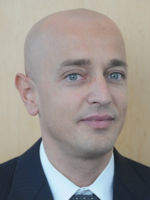
Tobias de la Garza Eckle, MD, PhD, FASA
Chair, Educational Advisory Board
University of Colorado Anschutz Medical Campus
Aurora, CO
|

