AUA Scientific Advisory Board (SAB): Fostering a Community for Anesthesiology Researchersby Ben Julian Palanca, MD, PhD and Jiapeng Huang, MD, PhD Maintaining a robust mission of biomedical research has become fiscally challenging for both investigators, departments, and institutions. How will research survive in academic anesthesiology? As we assume SAB leadership, we reflect on this question and how the AUA could contribute to the development and retention of physician-scientists and researchers. The AUA continues to be a unique venue to support researchers as a vital component of our profession. For many members, presenting at the AUA as a trainee or junior faculty member was a formative experience that defined our early career. We received valuable suggestions from esteemed researchers whose decades-old papers we had cited in our posters or used as the basis for our presentations' introductory slides. We were introduced by our mentors to members who served as editors of anesthesia journals or reviewers on NIH study sections. In contrast to specialty meetings more narrowly aligned with our content expertise, the AUA meeting allowed engagement of a diverse scientific audience, a prelude for appealing to a diverse grant review committee or future invited grand rounds audience. The AUA 2026 Annual Meeting provided another opportunity to continue this tradition, offering networking and career development perspectives from academic anesthesiology leaders. Productive workshops on mentorship engaged trainees and faculty. An SAB T32 Program Directors Roundtable session, organized and moderated by David Mintz and Christine Sang, saw a vibrant discussion of shared experiences, challenges, and tactics. Diverse topics included filling fellowship positions with non-anesthesiology physician scientists and challenges in renewing program grants. Launch times for physician scientists from T32 through foundation mentored research awards and into NIH K-awards were compared. Nobel Prize laureate David Baker provided inspiration for all in providing a vision for developing novel therapeutic peptides using deep learning. Over 50 moderated poster presentations complemented coffee introductions and trainee awardee presentations. On the final meeting day, Creed Stary and Brant Wagener moderated the SAB panel, “Funding Your Research Program: There’s More Than One Fish in the Sea.” Given the recent uncertainties, delays, and opaqueness on NIH grant review and award distributions, this timely session was thought-provoking for funding portfolio diversification, with presentations by Michael Gropper, Max Kelz, and Meghan Lane-Fall. SAB members compiled feedback and suggestions for next year’s meeting. The SAB looks forward to developing scientific programming throughout the coming year. Our overall goal for the next two years is to support the recruitment and retention of anesthesiology researchers through AUA member support. We have assembled a broad team representing 13 academic departments to bolster the scientific program for the AUA 2027 Annual meeting. We appreciate the contributions of the immediate SAB Past-Chair, Christina Pabelick, and outgoing board members over the past year. We anticipate multiple webinars leading up to the upcoming meeting in Houston. The webinars will represent content expertise of SAB members, including development of new anesthetics and repurposing of current ones, advances in delirium and other postoperative neurocognitive disorders, advances in understanding and treating pain mechanisms, lung protection and clinical outcomes, and neuroscience of anesthetics and their interaction with sleep. Other activities will address early- and mid-career investigator needs. These include networking among T32/T35 awardees and program directors, updates on navigating NIH grant review/awards, initiating and navigating industry partnership, and peer mentoring. Expertise from current standing members of NIH study section will be leveraged given the ongoing flux in supporting federally funded research. The SAB requests the assistance of academic anesthesiology leaders to collectively nurture aspiring researchers and physician-scientists. Prioritization of leave for AUA meeting attendance by departmental leadership is encouraged. We request T32, T35, and residency research-track program directors to discuss the AUA meeting with trainees. Principal investigators are asked to sponsor trainees for abstract submission and presentation in Houston. Thank you in advance for supporting our efforts in AUA to support the scientific component of our specialty. Author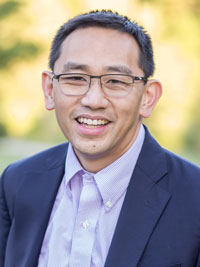 Ben Julian A. Palanca, MD, PhD, MSCI
|